
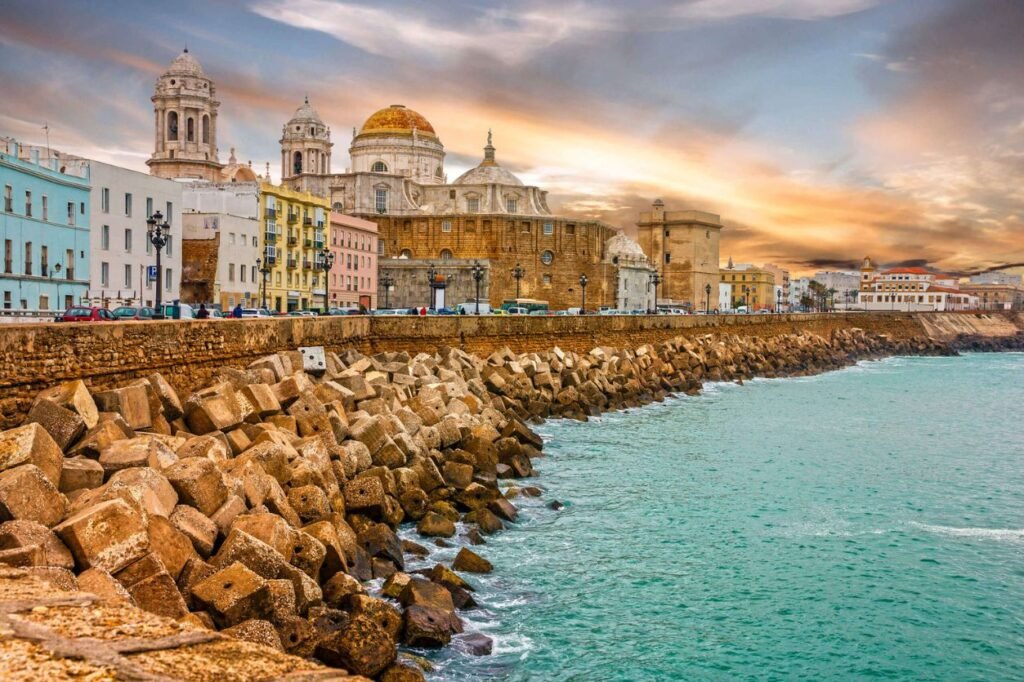
With over 3,000 years of history under its belt, the ancient city of Cádiz proudly holds the title of the oldest continuously inhabited city in the Western world. Popularly known since time immemorial as the “Tacita de Plata” (Little Silver Cup), this tiny peninsula connected to the mainland by a thin strip of sand is a unique haven in Andalusia where the light, the Atlantic breeze, and the wit of its locals will hook you from minute one.
At Cholleros Viajeros, we know that wandering its fortified alleys, climbing the watchtowers that guarded trade with the Americas, and eating some good local fried fish (“pescaíto” frito) doesn’t have to break the bank. Skipping the usual empty lists, we’ve designed this guide packed with pure facts, real parking logistics, and local secrets so you can plan your getaway hassle-free and weave your perfect itinerary at the best price.
🌤️ Weather and Best Time to Visit (Beware of the Levante Wind)
Cádiz enjoys a fantastic microclimate all year round thanks to the embrace of the ocean, but there is one meteorological factor that can ruin your beach plans in a matter of minutes: the dreaded Levante wind. Here’s how the city behaves throughout the year:
- Spring and Fall (The Masterstroke): May, June, September, and October are hands down the best months. You’ll find temps between 22ºC and 26ºC (71-79ºF)—perfect for walking around without suffocating, the sea water starts looking very inviting, and hotels offer much more reasonable rates.
- February (The Carnival Ecstasy): A bucket-list experience you have to live at least once. The whole city hits the streets to sing witty, satirical songs (coplas and chirigotas). Just be prepared for the damp cold, extreme crowds, and paying premium prices for hotels (they sell out 6 months in advance).
- July and August (High Season): Intense heat softened by the cool Poniente breeze. The real trouble hits when the Levante wind blows: it’s a strong, hot wind that whips the beach sand at you like little needles, making swimming impossible. On those days, your only option is to take shelter in the narrow downtown streets or at the small La Caleta Beach (which is much more protected).
💶 Detailed Cádiz Travel Budget
Is traveling to southern Spain expensive? It entirely depends on the season and whether you know how to dodge the “tourist traps” in the main squares. Here is a realistic daily breakdown per person:
- Backpacker / Camper Budget (€35 – €50/day): Staying in downtown hostels or legally overnighting in your van outside the city walls (€15-20), eating paper cones of fried fish in the squares (€10), free activities (beach, city walls, Gadir Ruins), and riding the local bus.
- Mid-Range / Comfort Budget (€85 – €110/day): A night in a 3-star hotel or a cute shared apartment (€45-60 per person), heavy tapas sitting down in the La Viña neighborhood with generous portions (€25-30), a traditional breakfast of toasted flatbread with pork lard spread (mollete con zurrapa) (€4), and tickets to the Tavira Tower or Cathedral (€7).
- Premium / Luxury Budget (€180 – €220+/day): Boutique hotels set in ancient palace-homes of the Indies merchants (€90-130) and dinners at renowned restaurants tasting authentic wild-caught red tuna from the Barbate traps (€60-80).
🚗 Logistics: Getting There, Getting Around, and the Parking Nightmare
Reaching a peninsula surrounded by the sea has its tricks. If you’re flying in from another part of Spain, your destination is the Jerez Airport (XRY). From the terminal itself, you can catch the local train (Cercanías Line C1) or Media Distancia trains that drop you in the heart of Cádiz in about 45 minutes for less than €5. A total steal that saves you from renting a car.
If you arrive in your own vehicle, burn this into your brain: do not try to drive into the historic center. Its streets are a medieval maze full of cameras that fine non-residents, and the blue or orange paid street parking zones will drain your wallet in a couple of days.
💡 CHOLLERO TIP: Where to park safely for free
To avoid paying a single euro for parking, head straight to the new part of the city (Extramuros). Look for a free spot on the wide avenues near Cortadura Beach or the dirt parking lot next to the Elcano Sports Complex. From there, hop on the city bus (Line 1, which drives in a straight line) and you’ll be at the Puertas de Tierra (City Gates) in 15 minutes for just €1.20.
🥾 Step-by-Step Cádiz Itineraries (Optimized Routes)
The old town is mostly pedestrian, flat, and perfect for getting lost. We’ve designed these routes so you can piece together the monumental puzzle without wandering aimlessly. Click to unfold the route that best fits your trip:
🗺️ 1-Day Route: Express through the Tacita de Plata
- Morning (Roots): Cross the monumental Puertas de Tierra. Get lost in the arches of the medieval Pópulo Neighborhood, go down to the bleachers of the Roman Theater, and pop out into the massive Cathedral Square. Climb the Clock Tower to grab your first panoramic view.
- Midday (Flavor): Walk toward the Plaza de las Flores. Buy a good paper cone of fried fish at Freiduría Las Flores and eat it while strolling over to check out the bustling stalls of the Central Market.
- Afternoon (Views and Sunset): Enter the Tavira Tower to be blown away by its Camera Obscura. Walk along the green coastline by Genovés Park and Alameda Apodaca. End the day crossing the seawall to the San Sebastián Castle to watch the sun dip into the ocean at La Caleta Beach.
🗺️ 2-Day Route: The Cádiz Classic (Recommended)
- Day 1 (Trade and Underground): Spend the morning at the Gadir Phoenician Ruins and the Central Food Market (grab some tapas at its Gastronomic Corner). In the afternoon, review constitutional history at the Oratory of San Felipe Neri, climb Tavira Tower, and enjoy a tapas dinner around the San Francisco and Mina Squares.
- Day 2 (Fortresses and Sailors): Start at Genovés Park and the Candelaria Bastion. Visit the exhibits at Santa Catalina Castle. Spend a relaxed afternoon on the sand at La Caleta and, at nightfall, dive into the bustling taverns of the carnival-loving La Viña neighborhood to dine on roasted pork belly shavings (chicharrones) and crispy shrimp fritters (tortillitas de camarones).
🗺️ 3-Day Route or more: Beaches, Extramuros, and the Bay
- Days 1 and 2: Do the classic historic center itinerary described above without rushing.
- Day 3: Spend the morning walking the endless promenade in the modern area and taking a good dip in the miles of sand at Victoria or Santa María del Mar beaches. In the afternoon, head to the commercial port, get a catamaran ticket (barely €3), and sail across the bay to El Puerto de Santa María to feast on some high-quality seafood on the other side of the coast.
🏨 Where to Sleep (Chollero Recommendations)
If you stay in Extramuros, you’ll rely on the bus daily. The masterstroke is to set up your base inside the walled ring of the historic center so you can walk everywhere. We’ve combed through the city and give you 3 options that fit our philosophy:
📍 ZONE 1: Central Squares (The monumental heart)
Ideal to be just a step away from City Hall, the Cathedral, and shopping streets. The perfect epicenter if it’s your first time in the city.
- ✓ Total splurge: Hotel Boutique Convento Cádiz. The experience of sleeping in a restored 17th-century convent with a spectacular Andalusian courtyard. Silence and historic luxury.
- ✓ Unbeatable value: Hotel de Francia y París. A classic. Hyper-strategic location in the beautiful San Francisco Square, comfortable, and no bad surprises.
📍 ZONE 2: Central Market and La Viña Neighborhood
The area with the most nightlife, taverns, and noise. Ideal if you’re coming to experience the gastronomy, soak up the carnival vibe, and stay close to the urban beach.
- ✓ Gastronomic Hit: La Posada del Mercado. Right next to the food stalls, perfect for stepping out for tapas at the Gastronomic Corner without wasting a second.
- ✓ Adventurer Mode: Planeta Cádiz Hostel. Spotless bunk beds with lots of privacy, extreme cleanliness, a terrace, and a shared kitchen to stretch every euro of your budget.
🚐 Where to Sleep in your Motorhome or Camper Van
The Cádiz coast is highly protected, and the Local Police are very strict in summer about setting up camping gear (chairs, awnings, leveling ramps). Wild camping can slap you with a €300 fine. For a peaceful night’s sleep, here are the legal options:
- Cortadura Area (Extramuros): It’s not an official motorhome site with services, but the massive paved dirt lot right before reaching Cortadura beach tolerates overnight parking for motorhomes as long as you are perfectly parked within the lines and nothing sticks out.
- The Puerto Real or El Puerto Trick: If you need to empty grey and black water, the best strategy is to use the Puerto Real Municipal Area or park in the large lots in El Puerto de Santa María. Spend the night there, and in the morning catch the local train or the maritime catamaran that drops you right in downtown Cádiz in half an hour. You save yourself from navigating city streets and traffic stress.
🗺️ Interactive Map of Cádiz Must-Sees
Keep your phone charged. We’ve put together this interactive Google MyMaps separating neighborhoods, castles, recommended tapas zones, and an exclusive layer with free parking spots by color. Sync it to your phone and use it offline while you wander:
🏘️ The Ancient Legacy: Stone Alleys and Ruins
The urban grid of the old town preserves the footprint of Phoenician, Roman, and medieval sailors who turned this enclave into a beacon of maritime trade. Its archaeological secrets are literally right under the pavement.
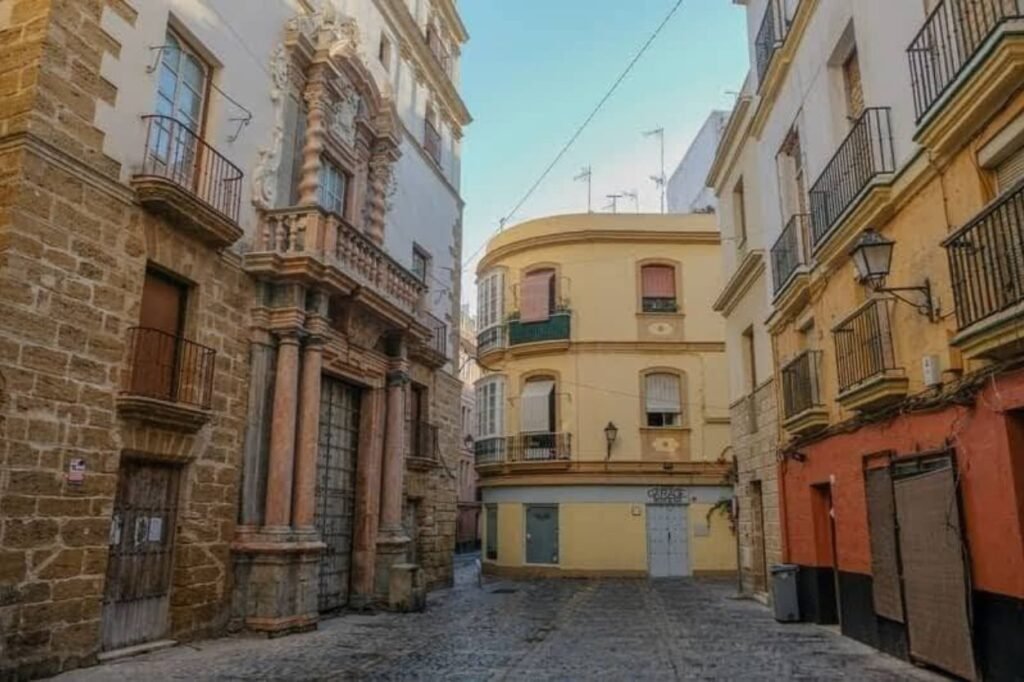
✨ The Pópulo Neighborhood and the Colossal Roman Theater
Entering the Pópulo Neighborhood through its medieval arches (La Rosa, Los Blancos, and El Pópulo) is like walking through a time portal. This fortified layout is the oldest in the city. Among its cobblestone streets emerge charming corners like San Martín Square or the old Santa Cruz Church (which served as the Old Cathedral until the city needed a more ostentatious temple).
However, the great archaeological milestone of the neighborhood came to light by chance in 1980 after a fire: the Roman Theater of Cádiz. Hidden for centuries beneath the foundations of modern houses, it is one of the oldest theatrical structures (1st century BC) and largest in capacity in Roman Hispania. Walking through its subterranean gallery is fascinating and, catch this, entry is 100% free.
🎟️ Excursions and Free Tours to squeeze the most out of the city
Cádiz has so many stories of pirates, constitutional sieges, and Indies trade that looking at its stones without a guide means missing half the movie. These are the top bookings:
- ✓ The perfect first contact: Free Tour through the historic center of Cádiz. Ideal for getting your bearings in Pópulo and understanding how the Phoenician city was founded.
- ✓ For mystery lovers: Night tour of mysteries and legends. A fascinating walk through dark alleys talking about ghosts, smugglers, and the Inquisition.
- ✓ From the sea: Catamaran ride around the Bay of Cádiz. Sailing along the castles and the city walls costs very little and offers the best photos.
☕ San Juan de Dios and Las Flores Squares
The daily pulse of the city is felt in its squares. The imposing San Juan de Dios Square, escorted by the neoclassical City Hall and full of palm trees, welcomes you from the port. But if you’re looking for color and local daily life, go to the central Plaza de las Flores (Topete), with its aromatic flower stalls, overflowing terraces, and the unmistakable smell of fried batter from its famous fried fish shop (freiduría).
🐟 Central Food Market and Gadir Ruins
Framed by a Doric colonnade, the Central Market isn’t just for grocery shopping. Its inner perimeter houses the Gastronomic Corner, a festival of food stalls where locals gather to drink ice-cold beer and taste raw red tuna, local oysters (ostiones), or freshly carved chicharrones.
Right next door, descending 9 meters under the Puppet Theater, the Gadir Archaeological Site lets you walk on spectacular glass walkways suspended directly over the streets, houses, and human remains of the ancient Phoenician city from the 9th century BC. It’s another mandatory and free visit (although it requires an online reservation due to capacity limits).
🕌 Golden Domes and the Indies Merchants’ Towers
During the 18th and 19th centuries, the city monopolized trade with the Americas. Wealthy merchants competed to build mansions crowned by the highest watchtower, in order to look out over the ocean and spot the arrival of their galleons loaded with silver.

🏛️ The Cádiz Cathedral: “Santa Cruz over the Sea”
The Cádiz skyline is dominated by the silhouette of its New Cathedral, a monumental mix of baroque and neoclassical styles. Its gigantic golden-tiled dome shines spectacularly reflecting the Atlantic. By paying its joint entrance fee, you can descend into the imposing Ostionera stone crypt (located below sea level, where composer Manuel de Falla rests) and walk up a ramp without stairs to the Poniente Tower, which rewards the effort with a fabulous bird’s-eye view of the waves crashing on the seawall.
🔭 Tavira Tower: The Supreme Balcony and the Camera Obscura
Of the more than 120 watchtowers still standing, the Tavira Tower is the undisputed boss. Being the highest point in the historic center (45 meters / 147 feet), it was designated as the official port watchtower. In addition to enjoying its 360-degree rooftops, it houses a Camera Obscura. It’s a brilliant optical device that, in absolute darkness, uses mirrors and lenses to project the moving, full-color life of Cádiz streets onto a curved white screen.
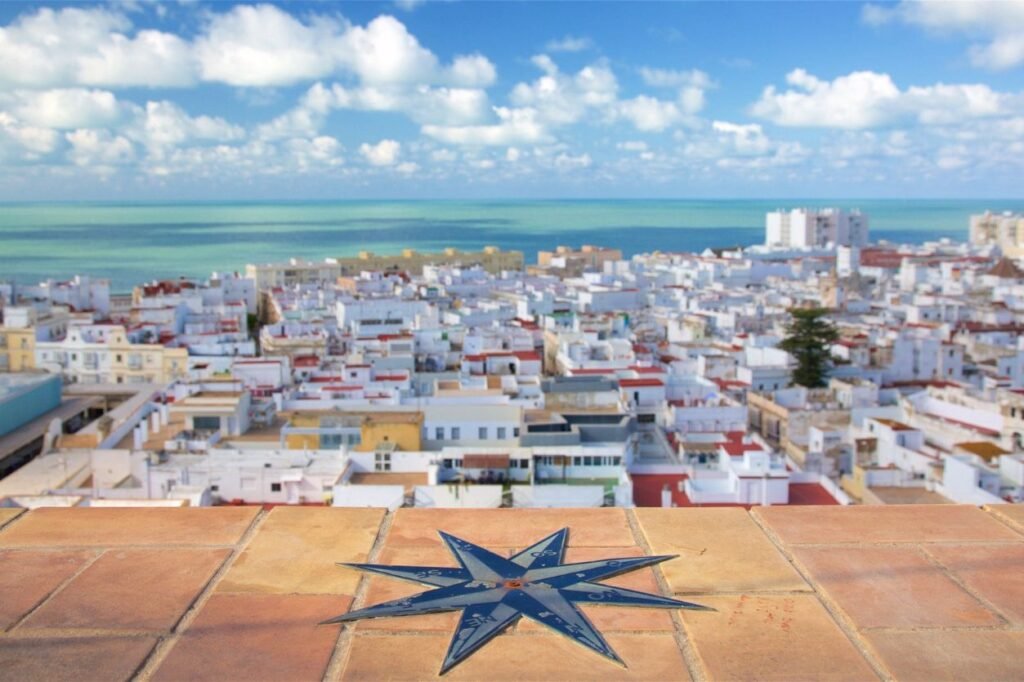
📜 The Oratory of San Felipe Neri (The Cradle of “La Pepa”)
This elliptical temple holds a place of honor in Spanish history. While Napoleon’s troops besieged and bombed the city, the Spanish Constitution of 1812 (affectionately known as “La Pepa”) was drafted, debated, and signed right here. Entering means breathing the living history of Spanish parliamentarism, and while you’re at it, admiring an immense canvas of the Immaculate Conception signed by Murillo on the main altar.
🌿 Coastal Walks, Gardens, and Castles on the Sea
Its condition as a besieged island forced the entire perimeter to be fortified with thick masonry walls. Today, those military bastions have been transformed into the most beautiful seaside promenades in Andalusia.

🌳 The Alameda Apodaca and Genovés Park
The Alameda Apodaca is probably the most romantic landscaped balcony in the south. Its regionalist aesthetic of Sevillian tile benches, wrought-iron streetlamps, and monumental century-old ficus trees brought from the Americas will give you the best shade in the city while you look out at the ocean. Following the promenade you’ll reach Genovés Park, the great green lung, famous for its hedges pruned into impossible shapes and a lake with a rock waterfall where you can stroll and even go into the lower cave.
🏰 Candelaria Bastion and Santa Catalina Castle
Skirting the sea you’ll stumble upon the Candelaria Bastion, formerly used to protect the port from English attacks. A little further on, extending into the beach sands, appears the Santa Catalina Castle. Its pentagonal star shape is perfect for walking for free along its upper battlements feeling the sea breeze.
🏝️ The Cinematic San Sebastián Castle
At the southern end of La Caleta starts a very long stone seawall stretching for a kilometer that literally takes you into the Atlantic. At the end stands the San Sebastián Castle and its historic lighthouse. The walk along this tongue of stone surrounded by water is so photogenic that it was chosen to film the legendary scene of Halle Berry emerging from the sea in the James Bond movie “Die Another Day”.
🌅 La Caleta and La Viña: The Carnival Soul of Cádiz
If you haven’t gotten your fingers greasy with olive oil in La Viña and haven’t seen the sun set in La Caleta, you simply haven’t been to Cádiz. It’s the epicenter of the local philosophy of life.
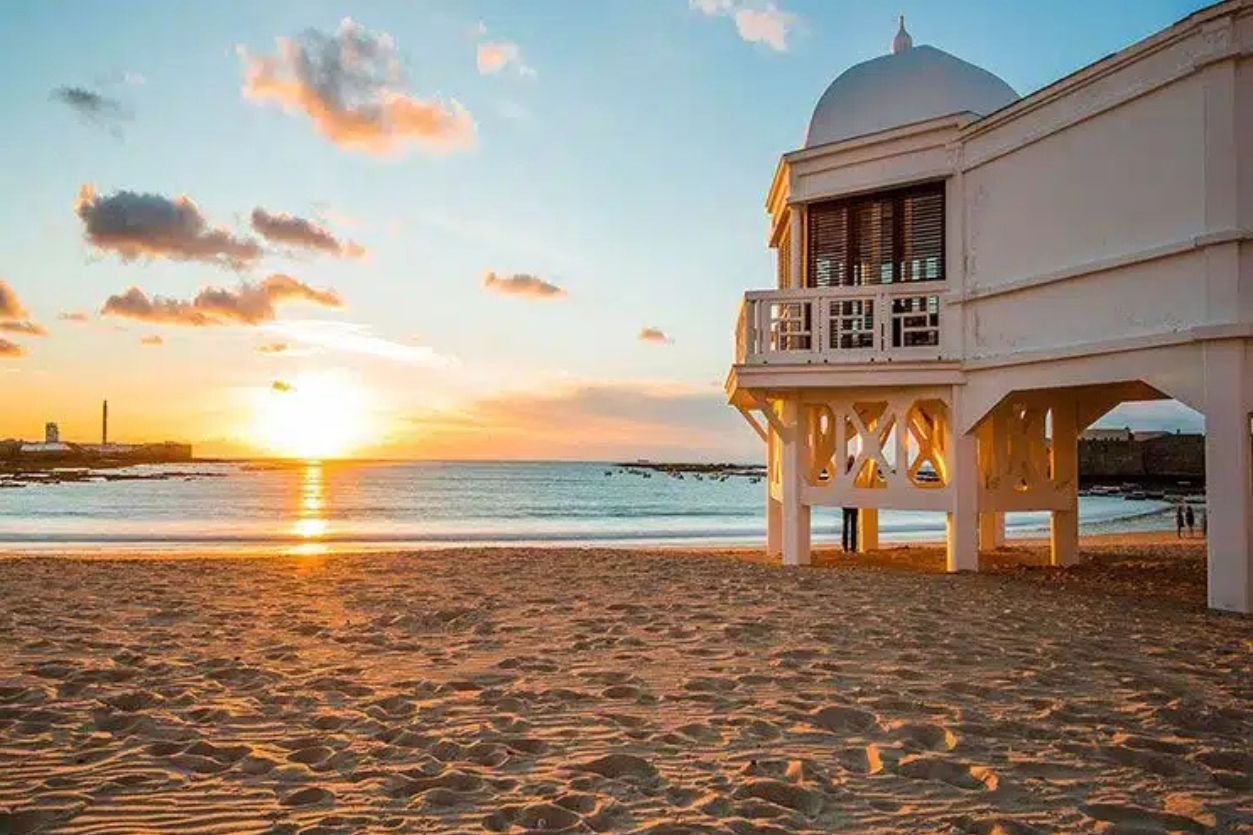
🏖️ Magical Sunsets at La Caleta Beach
Sheltered by the two castles and presided over by the iconic white building of the old Balneario de La Palma, this charming urban beach is the city’s natural amphitheater. Late in the afternoon, dozens of locals and travelers come down with a beer to sit on the sand or on the stone blocks to watch the giant sun get swallowed by the horizon, painting the small fishing boats stranded on the shore in fiery colors.
🎭 The Unmistakable La Viña Neighborhood
Right behind the sand roars the La Viña Neighborhood, of humble and seafaring origins. It is the undisputed heart of Carnival. Streets like Virgen de la Palma or the Plaza del Tío de la Tiza are packed with century-old taverns, flamenco clubs, and noisy terraces where people gather to talk loudly, sing, and devour plates of fried fish at very affordable prices.
📦 Chollero Backpack: What to bring out on the streets?
Cádiz is a city of walking for hours on cobblestones and ending up improvising on the beach sand. Don’t leave these three essentials out of your bag:
- ✓ For the relentless sun: A stainless steel thermal bottle. The heat in the narrow streets of Pópulo in July hits hard, and you’ll constantly need ice-cold water.
- ✓ For viewpoints and sunsets: A flexible smartphone tripod. You’ll want to anchor it to the railing of the San Sebastián seawall to capture a timelapse of the sunset.
- ✓ For a quick dip: Always carry an ultra-compact microfiber towel. It takes up as much space as an apple and saves you if you decide to jump into La Caleta on a whim.
🗺️ Hidden Treasures (For Curious Travelers)
If you’ve already crossed off the main monuments, escape to find these uncrowded oddities:
- The Catacombs of the Beaterio: An amazing network of underground galleries and 17th-century burials beneath the downtown streets. They organize very intimate guided tours (Calle Valverde).
- The Pirate’s House: At number 8 on Beato Diego de Cádiz street, look at the gargoyles and the cannon embedded in the corner. Legend has it that an old, repentant pirate lived there.
- The Alleys of the Cádiz Patios: Peek into the hallways of the palace-homes on Calle Ancha. Many leave their iron-wrought doors open, and you can see spectacular columned patios made of Genoese marble with century-old wells.
🥘 Micro-Food Guide: Exact Places to Eat (With Prices)
Avoid restaurants with neon signs and menus in 5 languages. Go where the locals pile up. Here are the temples of good eating and how much it will hurt your wallet (spoiler: not much):
- Taberna Casa Manteca (La Viña Neighborhood): A tiny bullfighting museum where you’ll eat standing up or leaning against a barrel on the street. Order the famous chicharrones especiales (slow-roasted pork belly shavings) cut extremely thin on butcher paper with lemon and some local Payoyo cheese. (Quick informal tapas for about €12-15 / person).
- Freiduría Las Flores (Plaza Topete): The ancient Cádiz fast-food. Walk in, order by weight a paper cone filled with marinated dogfish (cazón en adobo), cuttlefish, and shrimp fritters (tortillitas de camarones) fresh out of the boiling oil, and eat it sitting on a bench watching life go by. (Very generous cones for €8-12).
- Taberna El Tío de la Tiza (Plaza del Tío de la Tiza): Hidden under the shade of the trees right in the heart of La Viña. Order roasted mackerel with piriñaca (a fresh hash of tomato and pepper) or some dressed roe. (Sit-down dinner of tasty shared plates for €18-22 / person).
- Restaurante El Faro de Cádiz (La Viña Neighborhood): If you want to treat yourself (totally justified), this is the gastronomic sanctuary. Its bar is legendary for trying their garlic prawn croquettes or sitting down to taste the best wild-caught red tuna in the whole city. (Premium tapas at the bar for €30, sit-down tablecloth dinner for €50-60 / person).
👦 Practical Guide to Traveling with Kids to Cádiz
The city is very friendly and flat for pushing strollers, but sometimes kids get tired of looking at stones. These three great plans will keep them entertained:
- The Magic of the Camera Obscura (Tavira Tower): Seeing pedestrians walking “in miniature” projected live onto the white bowl in a dark room seems like pure magic to them. It’s a 20-minute science and espionage class.
- The Genovés Park Waterfall: Taking a botanical walk is nice, but being able to climb the rock stairs of the artificial waterfall and cross the lower cave dodging the water is something they will love (and it’s free).
- Seashell Hunting at La Caleta: When the tide goes down on this beach, the sea reveals rock pools where the little ones have a blast looking for crabs, little shrimp, and rare shells.
🐕 Guide and Rules for Traveling with Your Dog to Cádiz
Traveling south with your pet requires a lot of logistical caution, especially in the hot months, as the fines for stepping on the wrong sand are high:
- The Summer Beach War: From June 1st to September 30th (Official bathing season), dog access to the urban beaches of Cádiz (La Victoria, La Caleta, Santa María) is strictly prohibited and fined. However, in the low season (winter and spring), they usually turn a blind eye or open designated sections to walk along the wet shore.
- The Oasis of Camposoto Beach: If you travel in summer and want your dog to swim legally, you’ll have to take the car and drive 15 minutes to San Fernando. There they set up a marked section on the immense, wild Camposoto Beach exclusively for dogs (mind you, you’ll have to walk almost a kilometer from the parking lot across the sand to reach the delimited area).
- Extreme Caution with the Pavement: In August, the cobblestones and tiles of the historic center of Cádiz reach temperatures that literally burn dogs’ paw pads. Try to walk them through the trees of the Alameda Apodaca or avoid taking them out at 3:00 PM.
💃 Follow your route through Andalusia: Recommended Guides
Are you putting together a full road trip through the south? Discover our detailed, to-the-millimeter guides to keep adding jewels to your map:
🤔 FAQ: Frequently Asked Questions and Practical Tips for Traveling to Cádiz
How many days do you need to see the city of Cádiz?
To devour the historic center, go down to the Phoenician ruins, climb the towers, enjoy some good tapas in La Viña, and relax watching the sunset, you need 2 full days of walking. If you have a third day, use it to escape to the wide Extramuros beaches or take a boat across to El Puerto de Santa María.
What can you see in Cádiz entirely for free?
Cádiz is a monumental bargain. You have access without dropping a single euro to the immense Roman Theater, the Gadir Phoenician Archaeological Site (they only ask you to reserve a time online due to capacity), the Museum of Cádiz (free by showing your EU citizen ID), and walking along the battlements of the castles and defensive bastions.
Where can I park my car for free without getting fined?
Forget about trying to bring the car into the old center or you will pay a daily toll. Park in the new area of Extramuros (long avenues near Cortadura Beach or lots next to the Free Trade Zone). It’s a free parking zone (white lines). From there you take the line 1 bus and arrive right at the city walls for €1.20.
How do I get to downtown from the nearest airport?
The associated airport is Jerez de la Frontera (XRY). Right in the terminal itself, you have a small train station. Buy a ticket for the local train (Cercanías Line C1) or a Media Distancia, and a direct 45-minute ride will drop you right in the bustling heart of Cádiz for less than 5 euros.
Are you more of a sunset on the La Caleta stones kind of person, or getting lost looking for chicharrones in the aisles of the Central Market? Leave us your questions in the comments box below so we can help you tailor your getaway perfectly!