When the winter chill really sets in, the days get drastically shorter, and the first festive lights begin to dress up the imposing historic centers of our cities, Spain brings out its warmest, coziest, and most deeply nostalgic side. Far from being an exclusive privilege of freezing Central European cities like Strasbourg, Vienna, or Nuremberg, our country boasts a centuries-old holiday tradition packed with its own unique and fascinating identity: from ancestral Nativity fairs and natural fir tree markets hidden in mountain villages, to dazzling displays of millions of LED lights, ice rinks at the foot of monumental basilicas, and stalls where the intense aroma of roasted chestnuts perfectly blends with freshly made churros and traditional sweets baked by cloistered nuns.
Bundling up for a stroll through a Christmas market is so much more than doing some inevitable last-minute shopping; it’s a fully immersive sensory experience that instantly reconnects you with your childhood. It’s the unmistakable sound of Christmas carols echoing through stately stone arcades, the comforting steam rising from a cup of hot chocolate to fight off the cold, the meticulous search for the perfect handcrafted figure to complete your Nativity scene (or belén), and, above all, that contagious excitement breathing from every illuminated corner.
If you’re determined to plan a truly unforgettable winter getaway this year and want to fully immerse yourself in the holiday spirit, you’ve come to the right place. We’ve scouted the whole country to bring you a handpicked list of the 10 most beautiful, authentic, and spectacular Christmas markets in Spain. Grab your warmest scarf, gather your favorite travel buddies, and join us on this magical route through the country’s most dazzling spots to celebrate the holidays in style.
🌟 Plaza Mayor in Madrid: The undisputed classic in the heart of the capital
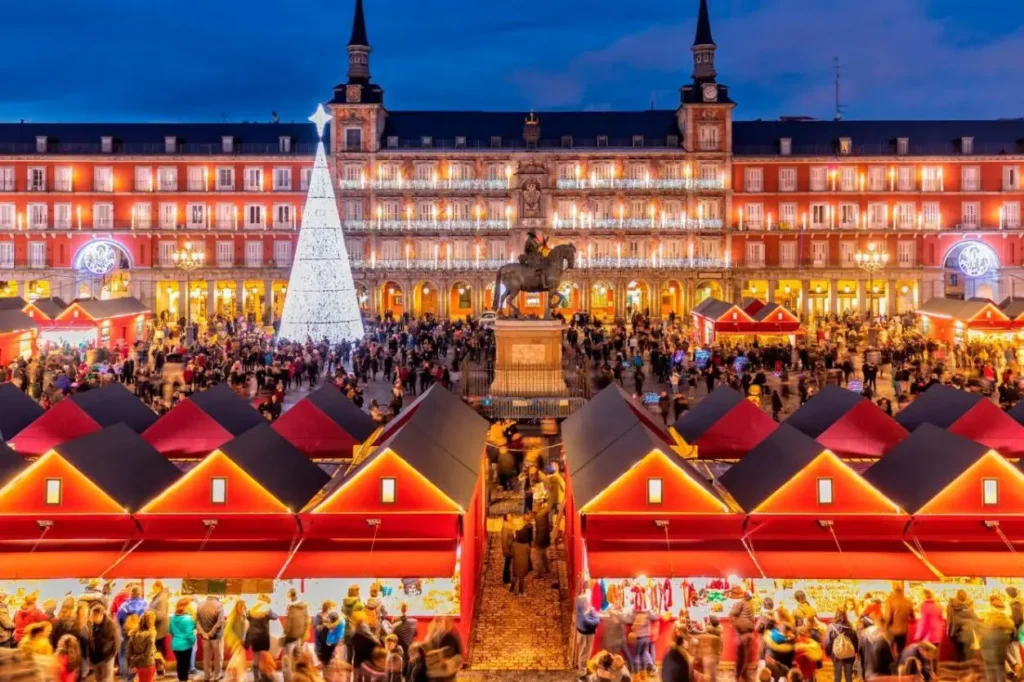
Talking about Christmas in Spain means thinking, almost instantly and inevitably, of Madrid’s iconic, vibrant, and monumental Plaza Mayor. With over a century of documented history in its current format, this market is undoubtedly the beating, bustling heart of the holidays in the country’s capital. Around a hundred picturesque and recognizable red stalls are strategically lined up under the regal Baroque arcades, attracting thousands of locals and travelers every season who keep this beloved intergenerational tradition alive year after year.
At their packed counters, you’ll find absolutely everything to bring the festive spirit home: from highly elaborate Nativity figures handmade and hand-painted by traditional artisans, fresh moss, and cork houses, to colorful tree ornaments, twinkling lights, traditional musical instruments like tambourines and zambombas (friction drums), and, of course, the classic prank items or extravagant funny hats that fill the city center with color and laughter. After strolling through the market, the quintessential Madrid plan is topped off with a comforting fried squid sandwich (bocadillo de calamares) at the crowded nearby bars or traditional churros with hot chocolate at the century-old, iconic Chocolatería San Ginés.
🎟️ The magic touch: Combine your must-do walk through Plaza Mayor with the city’s dazzling holiday lights by booking the Illuminated Madrid Christmas Tour.
🎄 Fira de Santa Llúcia in Barcelona: Centuries-old tradition at the foot of the imposing Cathedral
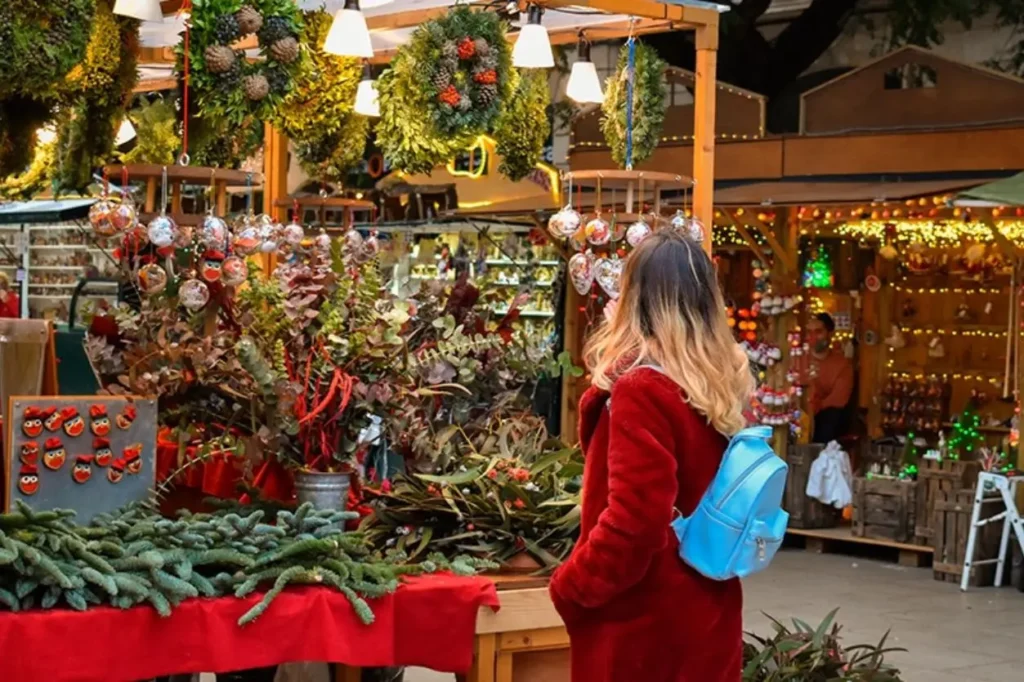
Held continuously since the distant year of 1786 in the splendid Plaça de la Seu, right in front of the imposing and detailed Gothic facade of the Barcelona Cathedral, the Fira de Santa Llúcia rightfully holds the title of being the oldest, most beloved, and most emblematic Christmas fair in all of Catalonia. With over 200 historic wooden stalls smelling of pine and resin, walking down its crowded aisles means diving headfirst into a rich artisanal universe full of symbolism, history, and Catalan identity.
The massive market is traditionally divided into four main sectors to make your visit easier: Nativity scenes and figures, greenery and vegetation (where fragrant fir trees and traditional lucky mistletoe abound), local crafts, and zambombas or festive symbolism. Here, taking the time to hunt down two of the most beloved, curious, and amusing figures of local tradition is mandatory: the unique Caganer (the iconic Catalan Nativity figure that, hidden away, represents the fertility of the earth and prosperity) and the Tió de Nadal (the friendly magical wooden log painted with a smiling face that kids “beat” with sticks on Christmas Eve to make it “poop” out presents and sweets).
💡 Vigo and its Cíes Market: The undeniable capital of light shows in the North
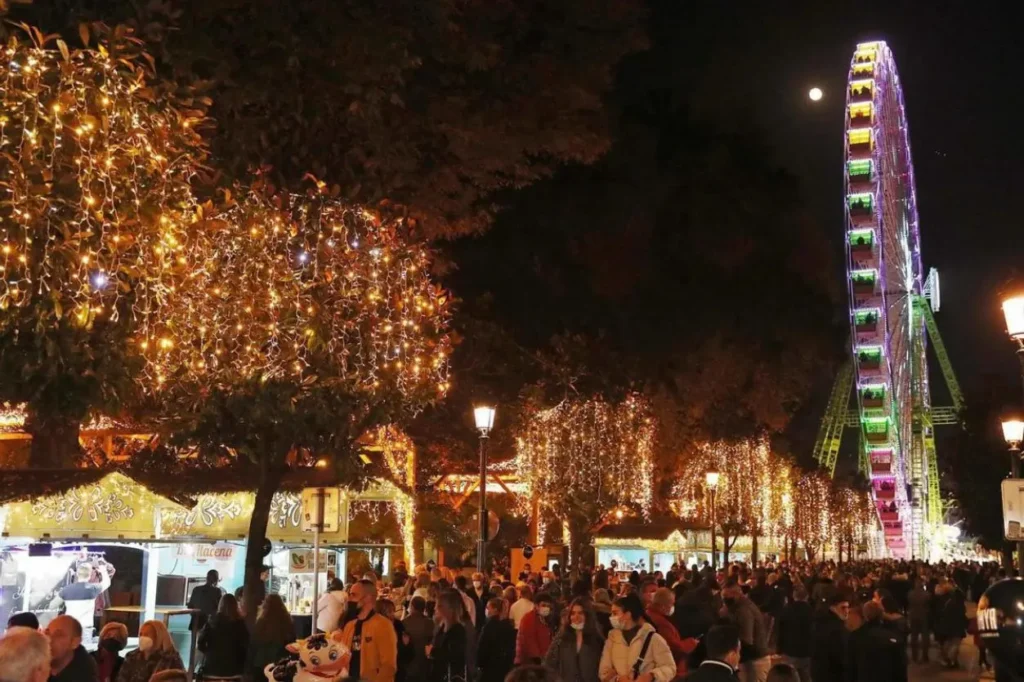
In recent years, the city of Vigo has forcefully positioned itself as one of the great Christmas phenomena, not just in Spain, but in all of Europe. This dynamic Galician city completely transforms itself, investing in an unprecedented display of millions of LED lights, laser projectors, and giant ornaments (like the famous gift box, the colossal snowman, or the tree of light) that turn its elegant streets into a genuine, vibrant theme park dedicated to Christmas.
The absolute epicenter of holiday shopping and gastronomy is the bustling Cíes Market, strategically located in the beautiful, tree-lined Plaza de Compostela (the Alameda). This extremely long market features dozens of charming wooden stalls lavishly decorated with garlands, selling artisanal products, original gifts, and a delicious culinary offering that ranges from comforting spiced mulled wine to mouthwatering Galician specialties. Just a few steps from the market, a colossal illuminated Ferris wheel over 60 meters high is set up, offering a bird’s-eye view of the dazzling holiday lights reflecting on the estuary.
🎟️ The magic touch: The downtown area literally gets packed with people. Don’t miss a single detail of this display by booking the Guided Tour of Christmas in Vigo and its Lights.
💡 TIP CHOLLERO: Plan your travel times with an extra buffer
The most spectacular Christmas markets (especially in cities like Vigo, Madrid, Zaragoza, or Seville) draw hundreds of thousands of visitors during the December weekends and the highly sought-after Puente de la Constitución bank holiday. If you’re traveling in your own car, book parking in private garages weeks in advance or smartly use public transport by parking on the outskirts. If you wing it, you’ll spend hours in traffic jams that will ruin your holiday spirit.
🏰 Plaza del Pilar in Zaragoza: The astonishing giant Nativity scene and the warm Aragonese spirit
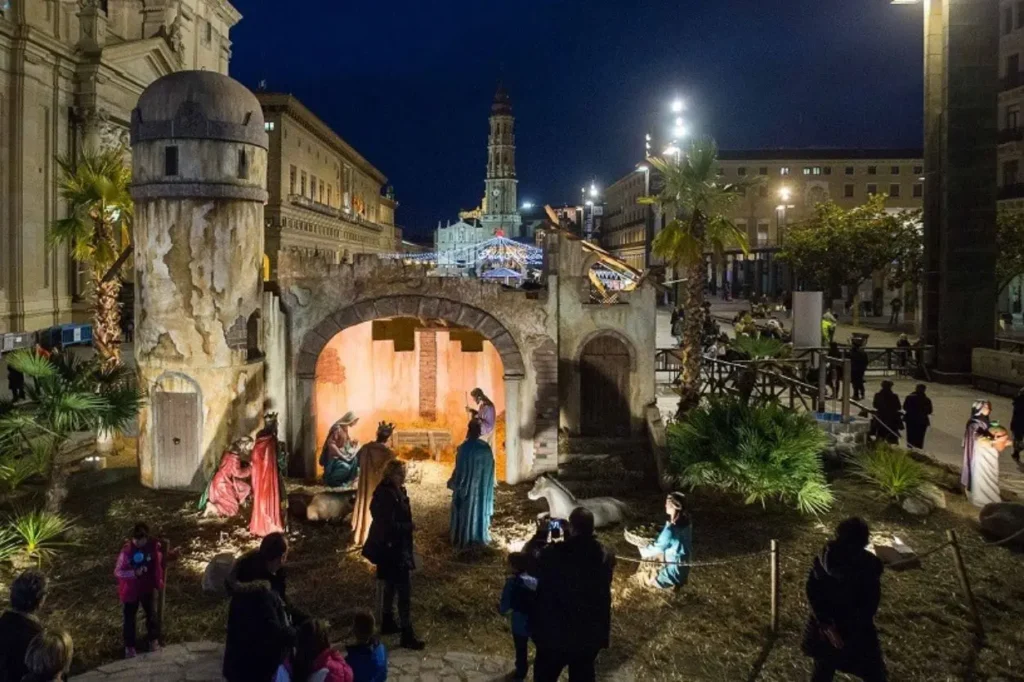
Zaragoza’s immense, majestic, and sprawling Plaza del Pilar hosts one of the most comprehensive, expansive, and varied Christmas markets in all of Spain every winter. With the colossal Basilica of Our Lady of the Pillar, illuminated in golden tones, acting as an unbeatable backdrop, this massive public space transforms for a month and a half into a remarkably well-kept festive village that delights kids, teens, and adults alike.
Zaragoza’s biggest draw and true pride during these dates is its superb life-size Nativity scene (Belén): a monumental, free installation of astonishing artistic quality that spans over 1,000 square meters. It features nearly a hundred perfectly characterized human-scale figures, live animals, and hyper-realistic recreations of traditional Aragonese and Palestinian trades. Neatly arranged around it are dozens of craft and food stalls (where you’ll always find rich local artisanal nougat or turrón and thick hot chocolate), plus a large indoor ice-skating rink and a fun sledding hill for tubing down.
🍊 Seville and its traditional Feria del Belén: Mudéjar art, devotion, and the deep aroma of shortbread
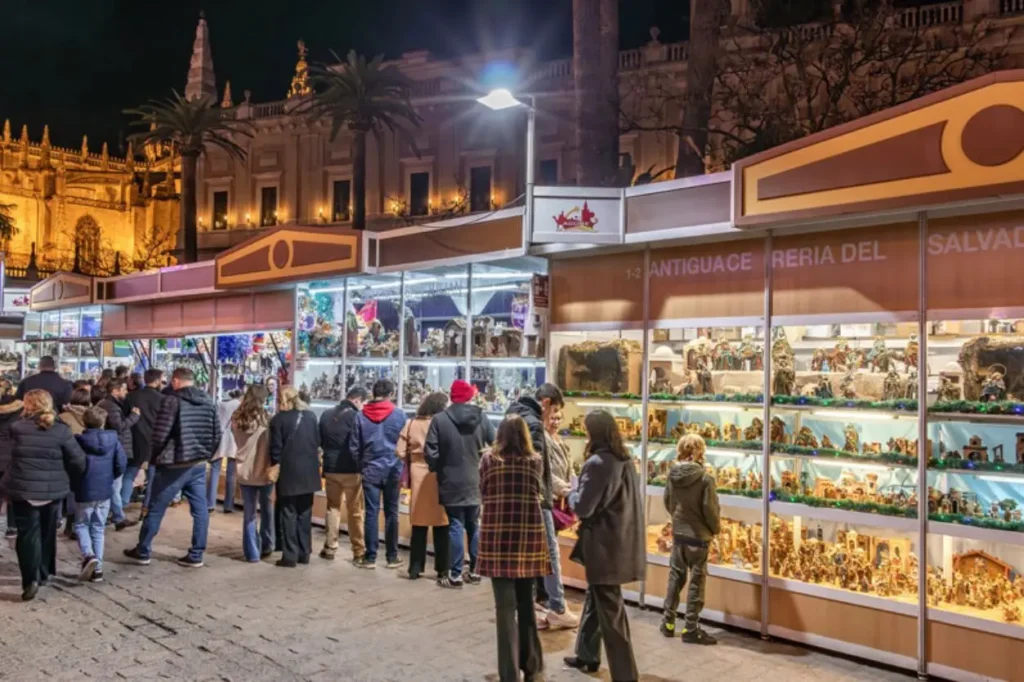
Seville embraces the arrival of Christmas with unmistakable elegance, plenty of street music, and a passion for Nativity detailing that is frankly hard to match elsewhere in the country. The main event for lovers of tradition, families, and detail collectors is the famous Feria del Belén (Nativity Fair), wonderfully located between the grandiose Cathedral (in the shadow of the Giralda tower) and the historic General Archive of the Indies, meticulously organized by the Seville Nativity Scene Association. It is one of the most specialized and prestigious fairs in Spain.
For those looking for general gifts, contemporary ornaments, and a more festive vibe with mechanical rides, the Andalusian city also sets up a huge, modern Christmas Market in the spacious Prado de San Sebastián Gardens, featuring several ice rinks and numerous food stalls. Strolling through the labyrinthine historic center amidst the unmistakable aroma of roasted chestnuts, the crumbly sweet mantecados from Estepa, and the joyful songs of the traditional campanilleros choirs is an absolute treat for all the senses.
🚀 City of Arts and Sciences in Valencia: Futurism, avant-garde, and festive spirit
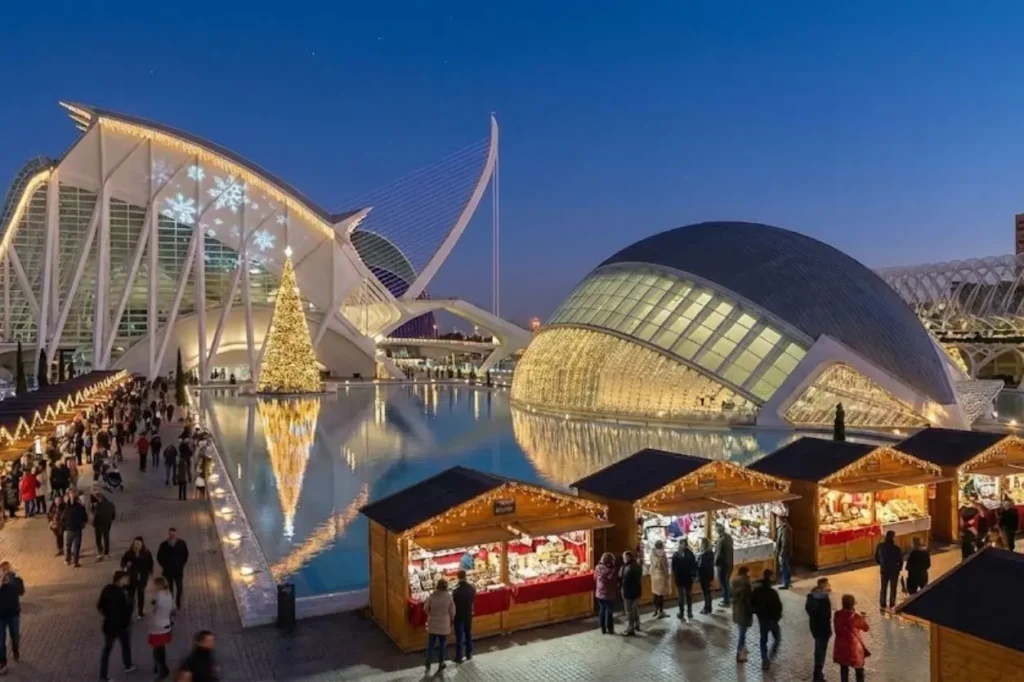
Valencia offers a frankly fascinating visual contrast by placing one of its most attractive and popular Christmas markets in the spectacular, futuristic setting designed by Calatrava: the City of Arts and Sciences. Under the immense white arches of the Umbracle and making the most of the beautiful reflections on the ponds’ large sheets of water, a charming and lively market of wooden stalls is set up, deeply focused on promoting local commerce, gourmet gastronomy, and quality craftsmanship.
It is a highly recommended destination for families traveling with children, as it offers an extensive daily program of free activities: fun kids’ workshops on origami, painting, and clay, carefully curated Nativity exhibitions, musical and puppet shows, food trucks with innovative proposals and traditional sweets, and an essential outdoor ice-skating rink. All this modern atmosphere perfectly complements the traditional Craft Market located in the central Plaza de la Reina.
🌺 Malaga: The light show on Calle Larios and the lush stalls at Paseo del Parque
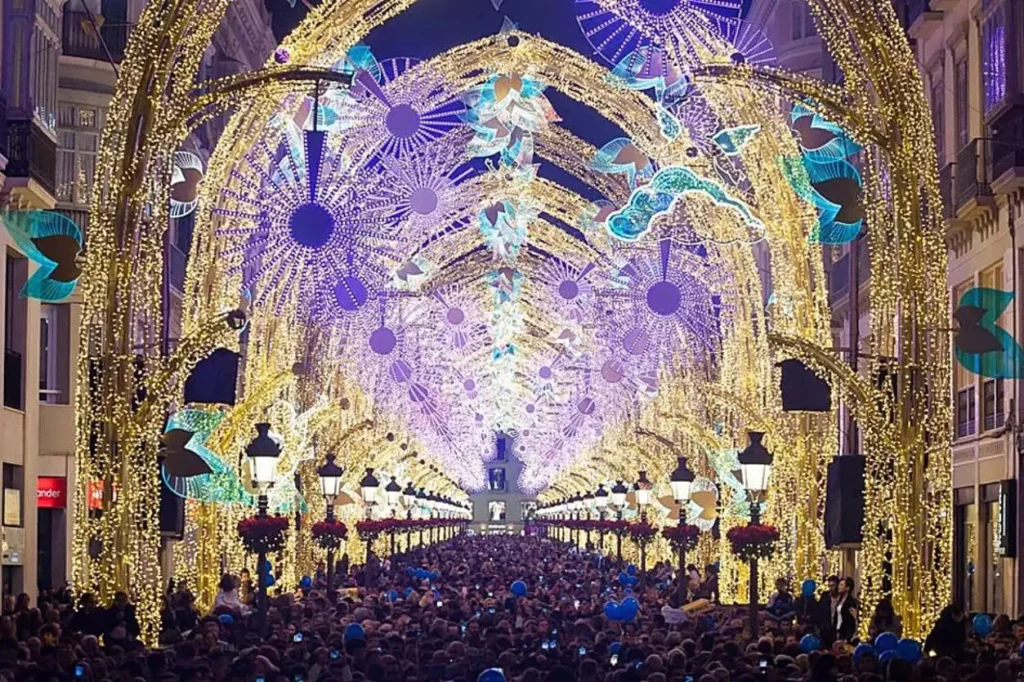
Malaga has captured international attention thanks to the fabulous and spectacular light-and-music show that massively packs the commercial and central Calle Larios every evening. However, beyond the dazzling arches of light dancing to the rhythm of Christmas carols, the dynamic capital of the Costa del Sol boasts a deeply rooted and high-quality tradition of winter markets.
The city’s most important, traditional, and extensive market stretches along the central Paseo del Parque, a lush botanical garden where dozens of palm-shaded stalls offer fine Nativity figures, Andalusian ceramic crafts, premium leather goods, classic wooden toys, and some incredibly delicious, hearty traditional sweets you simply can’t miss, like roscos de vino (wine cookies), mantecados, or the famous borrachuelos (sweet fried pastries). Moreover, just a few meters away and right by the sea, the modern Muelle Uno complex hosts another charming and sophisticated Christmas market, perfect for a stroll while feeling the ocean breeze.
🎟️ The magic touch: Marvel at the most famous and spectacular light show in southern Europe by booking the Malaga Christmas Lights Tour.
🌲 Fira de l’Avet in Espinelves (Girona): The magical fairytale village where fir trees are born
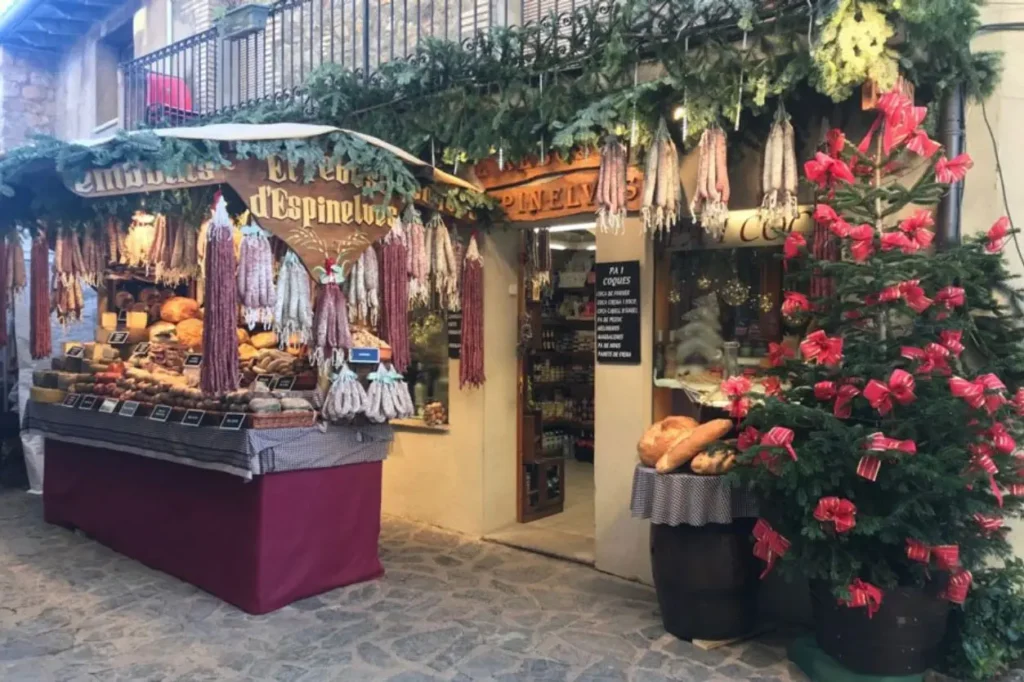
If what you’re truly seeking on your trip is a rural experience that is absolutely authentic, free from big-city neon, and totally different from the norm, you absolutely must travel to Espinelves. This is a tiny, impeccably kept, and beautiful village of rustic stone and slate roofs, surrounded by dense, damp forests in the lush Osona region (Girona). Here, far from the noise, the famous and bustling Fira de l’Avet (Fir Tree Fair) has been religiously celebrated in early December for over four decades.
This picturesque market is the quintessential place in Catalonia where thousands of families eagerly flock to pick out and buy their natural Christmas tree (specifically grown sustainably in local nurseries). The village’s narrow cobblestone streets fill with warm stalls where local producers sell fabulous artisanal cured meats (embutidos) from the Vic plain, high-mountain cheeses, homemade nougat, carved wooden crafts, and a comforting steam that invites you to enjoy hot broth and roasted chestnuts. A fairytale winter atmosphere, literally pulled from another era, that breathes pure peace.
❄️ Granada: Secrets, convent sweets, and crafts at the foot of the Sierra Nevada peaks
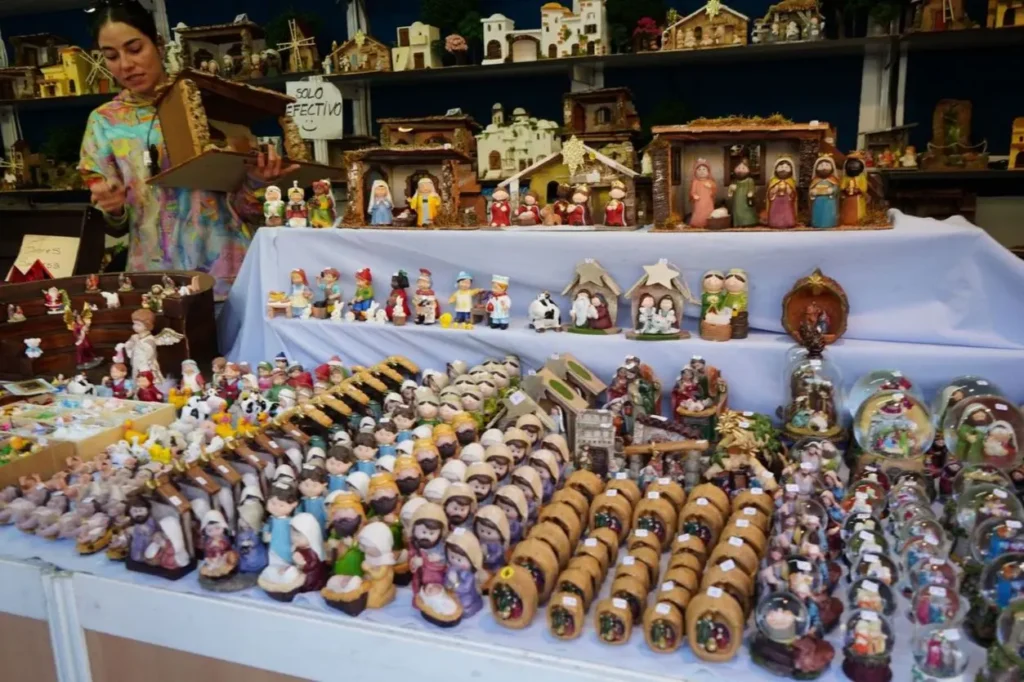
With the imposing white, snow-capped peaks of Sierra Nevada looming on the horizon as an unbeatable backdrop, and the perennial magic of the Alhambra watching over the city, Granada celebrates an endearing, peaceful Christmas deeply devoted to its rich craftsmanship. The main Christmas market, and the most beloved by locals, is set up in the heart of the city, spread between the emblematic Plaza Bib-Rambla and the nearby bustling Puerta Real square.
What makes the Granadan market truly unique, special, and different is the prominent presence of taracea products (the ancient Arabic technique of inlaying wood and bone into furniture), traditional Fajalauza pottery, and, above all, the coveted and elusive dulces conventuales. The cloistered nuns from several of the province’s oldest convents sell to the public, only during these days, pastries like mantecados, pestiños (honey-glazed fritters), hojaldrinas (flaky sweet squares), and marzipan, all handmade following secret centuries-old recipes. Enjoying some traditional churros in Bib-Rambla surrounded by Nativity stalls is a must-do holiday experience in the south.
⛵ Bilbao: Basque tradition, Olentzero, and lights along the Estuary
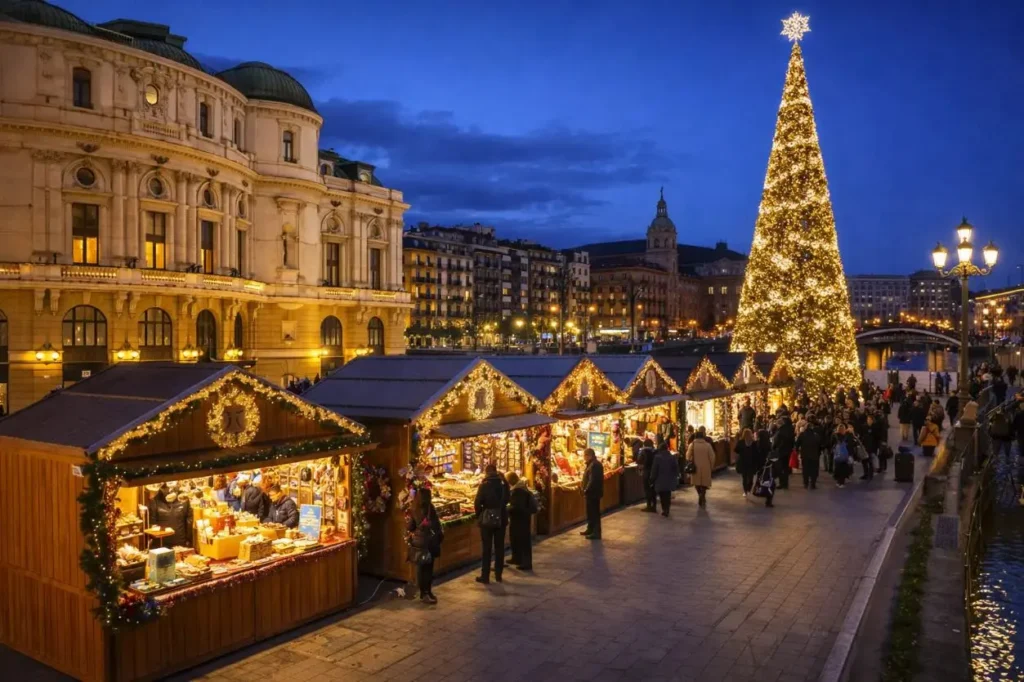
Bilbao puts on its best and most elegant winter attire by deploying its traditional and lively Christmas Market along the Ripa Pier and the tree-lined Arenal area, right on the banks of the historic Estuary that crosses the city. Its sturdy wooden stalls, beautifully decorated and illuminated, house a hugely varied display of local crafts, avant-garde Basque design, wooden toys, and carefully curated festive home decor.
On a purely cultural and gastronomic level, the Arenal market is the ideal and main place to connect with the legendary figure of Olentzero (the Basque coal miner) and Mari Domingi, the beloved mythological characters in charge of coming down from the mountains to bring gifts to Basque children. Of course, the hearty traditional gastronomy is a must: the steaming stalls of talos con chorizo (delicious grilled corn flatbreads stuffed with spicy sausage) paired with a good txakoli (light white wine) or a glass of hot cider are the best possible medicine against the northern cold before hitting the ice on their massive eco-friendly skating rink by the estuary.
🏨 The Premium Selection: Hotels for an unforgettable holiday weekend
If instead of just looking at the price, you prefer your hotel to be part of the magic and the experience, choosing well-located accommodation just steps from the illuminated areas will save you a ton of time in the cold and let you enjoy the festive nights on foot. Here are 4 iconic and central havens for these dates:
- ✓ Right in the very heart of Madrid: Hotel Pestana Plaza Mayor. Located literally in the capital’s Plaza Mayor. Stepping out of the majestic main door and coming face-to-face with the main Christmas market is a truly unforgettable luxury.
- ✓ Show-stopping luxury in Vigo: Hotel Nagari Boutique & Spa. Unbeatably situated just meters from Plaza de Compostela and the Cíes Market. The ideal refuge to relax and warm up in its spectacular spa after touring the city’s bustling lights.
- ✓ Gothic elegance and crafts in Barcelona: Hotel Colón Barcelona. Right in front of the imposing Cathedral and the beautiful stalls of the Fira de Santa Llúcia, offering panoramic and privileged views of the market from its historic balconies.
- ✓ Classic flavor and tradition in Seville: Hotel Las Casas de la Judería. A fascinating labyrinth of traditional houses and romantic Andalusian courtyards located right in the Barrio de Santa Cruz, just a very short walk from the exquisite Feria del Belén.
💃 Keep planning your incredible winter getaways across Spain
Are you left wanting to discover more fascinating and beautiful corners of our country for your upcoming winter trips and weekend escapes? Take a close look at our most exhaustive and complete travel guides:
🤔 FAQ: Frequently asked questions for organizing your perfect visit to the Christmas markets
What exact dates do Christmas markets in Spain usually open?
Although each city council has the autonomy to decide its official calendar, the vast majority of the big markets open their doors in late November (usually coinciding with the highly anticipated turning on of the city lights, between the last week of November and the lucrative early-December Puente de la Constitución bank holiday) and remain open to the public at least until January 6th (Three Kings’ Day). There are important exceptions, like very specific and rural events (such as the beautiful Fira de l’Avet in Espinelves), which only last around ten days in early December.
Which are objectively the best Christmas markets on the list to visit with young children?
If you’re traveling with the little ones in the house and are looking for attractions beyond simply buying crafts, the immense Plaza del Pilar Market in Zaragoza and the avant-garde one at the City of Arts and Sciences in Valencia are extraordinary options, as both feature dedicated children’s Christmas village areas, ice rinks, sledding slides, and a multitude of educational workshops. Vigo is also a surefire and unforgettable hit for kids thanks to its gigantic and colorful light attractions, Ferris wheel, tourist trains, and artificial snow.
Do you have to pay any kind of entrance fee or ticket to access the Christmas markets in Spain?
No, rest easy. Unlike some private venues or enclosed themed fairs in other European countries, the vast majority of Christmas markets in Spain are open to the public, free, and completely un-ticketed, as they are set up outdoors in main squares and major streets of historic city centers. You will only have to reach into your pocket to pay to use specific mechanical rides (like ice skating rinks, giant Ferris wheels, or classic carousels) or for the artisanal goods and food you decide to buy and consume at the stalls.
What is the best time of day to visit the markets and be able to stroll without the crowds?
If what you’re looking for is to stroll in total peace, stop to look at the details of the Nativity scenes, and buy crafts without suffering constant pushing and shoving, the undisputed best time is during weekday mornings (roughly from 10:00 AM to 1:00 PM). However, you must keep in mind that the true festive atmosphere and visual magic reach their peak right at dusk (from 6:00 PM onwards in winter), when the sun disappears and the spectacular artificial lighting suddenly turns on. If you decide to go on a weekend evening, assume there will be a massive influx of people and arm yourself with patience.
What typical products and crafts are a must-buy at Spain’s Christmas markets?
It depends on the region, but there are classics that never fail. In Catalonia (Barcelona or Espinelves) it’s essential to get your hands on a funny Caganer or a Tió de Nadal. Down south (Seville or Granada), polychrome clay for the Nativity scene and artisanal convent sweets are the undisputed kings. On a general level, blown-glass ornaments, handmade zambombas, and carved wooden figures to decorate the tree are the perfect souvenirs to take home while supporting local commerce.
Are Christmas markets usually open on public holidays like December 25th or January 1st?
The vast majority of markets remain open throughout the entire season without interruption, but hours on key holidays (December 24th, 25th, and 31st, and January 1st) undergo major changes. It’s common for stalls to close much earlier on Christmas Eve and New Year’s Eve, and to only open in the afternoon (or remain closed entirely) on Christmas Day and New Year’s Day. We highly recommend always verifying the official hours on each city council’s tourism website a couple of days before your trip to avoid finding the shutters rolled down.
And now it’s your turn: Which of these 10 wonderful and spectacular Christmas markets are you most excited to include in your next upcoming winter getaway? Leave us your honest opinion or your own recommendations for other secret markets in the active comments section below, and don’t forget to share this comprehensive article with your travel buddies to start spreading that beautiful holiday excitement today!