Divided by the majestic Guadalquivir River and blessed with a special color that dazzles from the very first moment, Seville is one of those destinations that exceeds all expectations. The capital of Andalusia combines, like no other city, an immense monumental heritage with the contagious joy of its streets, the scent of orange blossoms in spring, and the overflowing passion of flamenco and tapas culture.
At Cholleros Viajeros, we know that tackling a city with the largest historic center in Spain can be overwhelming and, if you don’t plan well, quite expensive. Steering clear of generic lists, we’ve designed this guide with real logistics on parking, prices at the local taverns where Sevillians actually eat, and tricks to skip the lines. Get ready to discover the most authentic and monumental Seville while optimizing every euro and every minute of your trip.
🌤️ Weather & Best Time to Travel (The Thermometer Challenge)
Seville has a climate of extremes. Choosing the right month for your visit will completely define your street-level experience. Here is how the Andalusian capital behaves throughout the year:
- Spring (The pricey splendor): March, April, and May are magical. The city smells of orange blossoms, and temperatures (22ºC – 28ºC / 72ºF – 82ºF) are perfect. However, if your trip coincides with Holy Week (Semana Santa) or the April Fair (Feria de Abril), be prepared for extreme crowds and paying triple the usual hotel rates. Book 6 months in advance.
- Autumn (The masterstroke): Late September, October, and November offer the same idyllic weather as spring, but the city is much quieter, and accommodation prices stabilize. It’s our favorite budget-friendly time to go.
- Summer (The Iberian oven): July and August are incredibly tough. Temperatures exceed 40ºC (104ºF) almost daily. If you have no choice but to travel during these dates, you’ll have to adopt the “Andalusian schedule”: wake up very early for sightseeing, take refuge with air conditioning or a siesta from 2:00 PM to 7:00 PM, and go out to enjoy the city once the sun sets.
💶 Detailed Seville Travel Budget
The great thing about Seville is that eating well and cheaply is still the local sport, as long as you know how to avoid the most “touristy” streets in the Santa Cruz neighborhood. Here’s a daily breakdown per person:
- Backpacker / Camper Budget (40€ – 55€/day): A night in a downtown hostel or legal free overnight stay in an RV area (20€), eating traditional montaditos de pringá (slow-cooked meat sandwiches) and classic tapas standing at the bar (15€), strolling through squares, María Luisa Park, and Plaza de España (free), and taking the bus.
- Mid-Range / Comfort Budget (90€ – 120€/day): A room in a 3-star hotel or a charming guesthouse in the center (50-65€ per person), sit-down tapas in Triana or Alameda de Hércules with drinks (30€), a traditional breakfast (4€), and tickets to the Cathedral or the Alcázar (15-20€).
- Premium / Luxury Budget (190€ – 250€+/day): Boutique hotels with rooftop pools facing the Giralda (120-150€), dinners at signature restaurants or a VIP flamenco show (70-90€), and getting around by taxi.
🚗 Logistics: How to Get There & Where to Park Without Going Broke
Getting to Seville is a breeze thanks to the San Pablo Airport (SVQ) and the Seville-Santa Justa High-Speed Train (AVE) station. From the airport, the special EA bus drops you off in the center (Santa Justa, Torre del Oro, Plaza de Armas) in about 35 minutes for 4€. If you arrive by high-speed train, you’re a 15-minute walk from the historic center or a short bus ride away (lines 21 or 32).
The real problem arises if you travel with your own car. Downtown Seville is a maze of single-lane streets, pedestrian zones, and low-emission restrictions. Street parking in the historic center is literally impossible, and central underground parking garages will charge you between 20€ and 25€ a day.
💡 PRO TIP: The Trick to Parking for Free in Seville
Flee the center with your car. The best areas to park 100% for free and safely are: Isla de la Cartuja (near Torre Sevilla, from where you can walk across the bridge to the center) or the huge park-and-ride lot next to the Blas Infante Metro station (Los Remedios neighborhood). Leave your car there for free, hop on the subway, and in 3 stops you’re at Puerta de Jerez, just a minute from the Cathedral.
🥾 Step-by-Step Seville Itineraries (Optimized Routes)
Organizing your days in Seville is vital to avoid unnecessary wandering and ending up with wrecked feet. Click to unfold the route that best fits your getaway timeline:
🗺️ 1-Day Route: Express Through the Andalusian Capital
- Morning (Monumental): Straight to the historical heart. A guided tour of the Royal Alcázar first thing in the morning. Afterward, cross the square and enter the Seville Cathedral, climbing the Giralda for the best views.
- Midday: Quick tapas hopping through the picturesque and labyrinthine Santa Cruz neighborhood, passing through Plaza de Doña Elvira and the Callejón del Agua (Water Alley).
- Afternoon (River): Head down to the Torre del Oro, walk along the Guadalquivir, check out the majestic Plaza de España at sunset, and finish by crossing the Isabel II bridge for dinner in the Triana neighborhood.
🗺️ 2-Day Route: The Sevillian Classic (Recommended)
- Day 1 (The Heritage Axis): Morning dedicated to the Cathedral, the Giralda, the Archive of the Indies, and the Royal Alcázar. Afternoon of extensive strolling through the Santa Cruz neighborhood. Night of tapas and a flamenco show.
- Day 2 (Shopping, River, & Triana): Walk from Plaza Nueva down the commercial Sierpes street to Plaza de la Encarnación to go up Las Setas (The Mushrooms). In the afternoon, a green route through María Luisa Park and Plaza de España. Top off the day by crossing over to Triana via Paseo Colón and the Torre del Oro.
🗺️ 3 Days or More: Palaces and Rome
- Days 1 & 2: Follow the classic two-day itinerary, taking much more time for museums.
- Day 3: Dedicate the morning to the north of the city: Palacio de las Dueñas, Palacio de la Condesa de Lebrija, or Casa de Pilatos. Head over to the Macarena Basilica and its walls. In the afternoon, take a bus (or tour) getaway to the spectacular Roman ruins of Itálica in Santiponce.
🏨 Where to Sleep (Our Budget-Friendly Recommendations)
Seville is very spread out, but everything you want to see is concentrated. If you stay in peripheral neighborhoods like Sevilla Este or Macarena Norte, you’ll waste more than an hour a day on the bus. Always choose the center (Santa Cruz, Arenal, or Alfalfa). Here are our top picks:
🏨 Recommended accommodations right in the center
Choosing the right location will save you time and allow you to take breaks to freshen up. Here are our favorites with excellent value for money:
- ✓ A Treat / A stone’s throw from everything: Hotel Rey Alfonso X. Magnificent location, impeccable, and with a rooftop pool (vital in the warmer months), very close to the Alcázar and the Giralda.
- ✓ A Sure Hit / Andalusian charm: Hotel Doña Lina. It has a beautiful inner Sevillian courtyard, traditional decor, and you literally wake up in the heart of the Santa Cruz neighborhood.
- ✓ Practical & Cozy Option: Hotel Doña Manuela. Clean, functional, and budget-friendly rooms strategically located next to the Murillo Gardens.
🚐 Where to Overnight with a Motorhome or Camper in Seville
Exploring the Andalusian capital on wheels requires discipline. Driving a large volume vehicle through the narrow streets of the center is a guarantee for scratches and fines. You have two great options to set up your base camp:
- Seville Motorhome Area (Puerto): Located very close to the Puente de las Delicias, it offers all filling and emptying services, security, electricity, and you are connected to the city center via a flat bike lane in 15 minutes.
- Puerto Gelves Area: A few kilometers from the city, this marina on the Guadalquivir River offers motorhome pitches in a very quiet setting, connected to the capital by regular metropolitan bus lines.
🗺️ Interactive Map of Seville’s Tourist Spots
Keep your phone charged. We’ve put together this interactive Google MyMaps, color-coding the monumental heart, the palaces, the river area, and Triana. Save it and use it offline to navigate the narrow streets:
👑 The Historic Heart: Cathedral, Alcázar, and Santa Cruz
Here is where Seville’s monumental trident is concentrated, declared a World Heritage Site by UNESCO. This ensemble perfectly encapsulates the clash and coexistence of Islamic and Christian cultures.
🎟️ Essential Visits and Tours (Skip the Lines)
The Cathedral and the Alcázar are the kings of tourism in Spain. Attempting to buy tickets at the box office on the same day is a time-wasting suicide mission. We highly recommend bringing these reservations:
- ✓ To start off on the right foot: Free Walking Tour of Seville. It’s the perfect introduction to understand the city and get your bearings geographically.
- ✓ The Lifesaver Combo: Guided tour of the Royal Alcázar and the Guided tour of the Cathedral and Giralda. You walk straight in with the guide without sucking up hours of queuing in the sun.
- ✓ The Best Sunset: Boat ride on the Guadalquivir. The perspective from the river with the illuminated bridges is spectacular.
✨ Seville Cathedral and the Majestic Giralda
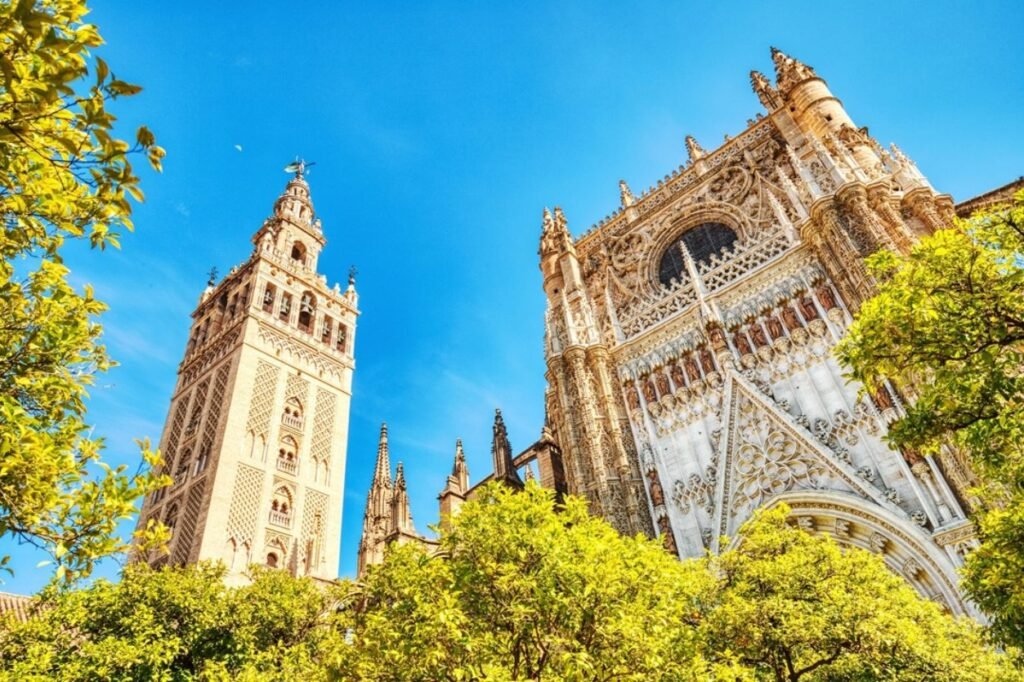
Built on the foundations of the old Almohad mosque, it is the largest Gothic cathedral in the Christian world. Its interior houses the Main Altarpiece (a mind-blowing piece of gilded wood), the tomb of Christopher Columbus, and the beautiful Patio de los Naranjos (Courtyard of the Orange Trees). But the great icon is the Giralda, its bell tower (former Arab minaret). Walking up its 35 ramps (designed so the sultan could ride up on horseback) rewards you with the best panoramic view of the city.
🏰 The Royal Alcázar and the Patio de Banderas
The Royal Alcázar is an active palatial complex that will leave you speechless. The labyrinths of plasterwork in the Mudéjar Palace of Pedro I are so spectacular that the producers of Game of Thrones chose this location to bring the kingdom of Dorne to life. Its endless gardens, full of fountains and peacocks, are a haven of peace. On your way out, peek into the charming Patio de Banderas, a square surrounded by orange trees that perfectly frames the Giralda for a postcard shot.
💡 PRO TIP: The Alcázar Timing Trick
If you travel in the warmer months, book your ticket for the very first morning slot (9:30 AM). At that hour, the light in the Mudéjar courtyards is soft for taking photos, there are no massive tour groups, and most importantly, you’ll be able to stroll through the gigantic outdoor gardens before the midday heat hits.
🍊 The Santa Cruz Neighborhood and the Archive of the Indies
The old Jewish quarter is a maze of narrow alleys (designed this way to keep shaded in summer), whitewashed facades, and balconies lined with geraniums. Get lost along the Callejón del Agua (Water Alley, next to the Alcázar walls), sit on the tiled benches in Plaza de Doña Elvira, and go for tapas along the lively Calle Mateos Gago. Just steps away, you’ll find the majestic Archive of the Indies, the Renaissance building that guards all the documentation, maps, and ship logs of the conquest of the Americas (entry is free).
If you want to add a different twist to your walk through the neighborhood, the mysteries and legends evening free tour will reveal sword duels, stories of the Inquisition, and secrets under the light of the yellow streetlamps.
🏛️ Modern Squares, Shopping, and Viewpoints
Beyond the surroundings of the Cathedral, the center of Seville pulses with frantic commercial activity surrounded by Baroque churches and avant-garde architecture.
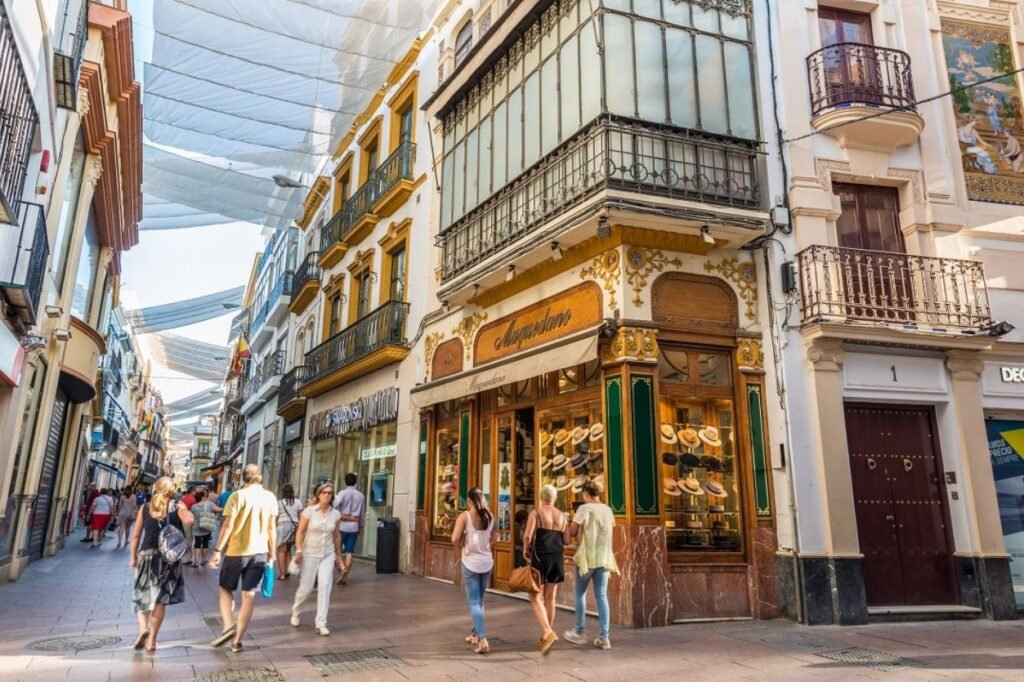
🏛️ Plaza Nueva, City Hall, and Calle Sierpes
Plaza Nueva, guarded by palm trees and the imposing Plateresque facade of the City Hall, is the ideal starting point for shopping. From the back of the city council building (Plaza de San Francisco) begins the legendary Calle Sierpes. Covered by awnings in the summer, this pedestrian artery snakes between century-old shops selling fans, hats, and shawls, emptying out into the authentic Plaza del Pan.
✨ Church of the Savior and Plaza del Cabildo
The Church of the Divine Savior (Iglesia del Divino Salvador) is the second-largest temple in the city after the Cathedral. Its red and gold interior will dazzle you. Nearby (facing the Cathedral, but very hidden behind a passageway), look for Plaza del Cabildo. This beautiful semi-circular little square with marble arches and remains of the Almohad wall hosts a picturesque antique stamp and coin market on Sundays.
🍄 Las Setas de Sevilla (Metropol Parasol)
Breaking away from traditional aesthetics, Plaza de la Encarnación is home to the largest wooden megastructure in the world. Walking up its curved walkways gives you an exceptional viewpoint, especially if you go at sunset to watch the city lights turn on. Underground, the Antiquarium museum protects the impressive Roman mosaics found during the construction.
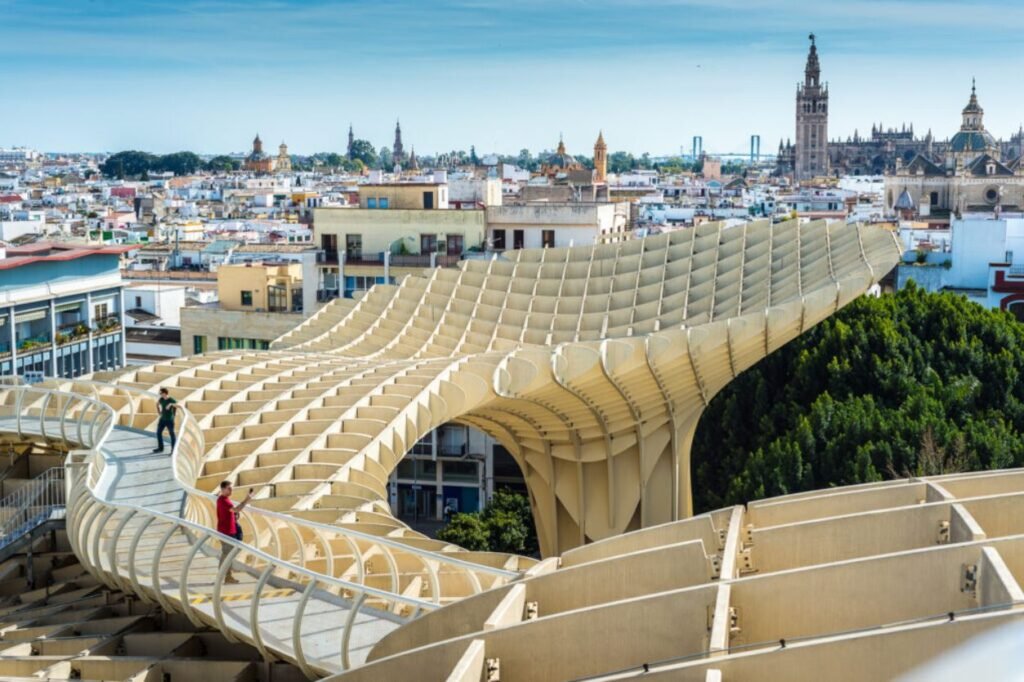
💡 PRO TIP: Sunset at Las Setas
Going up to Las Setas viewpoint exactly at sunset is an awesome plan, but the line at the ticket booth is massive at that exact time. Secure your access by booking your ticket online in advance and show up 30 minutes before sundown to grab the best spot at the wooden railing.
📦 Bargain Hunter’s Backpack: Basics for Walking Seville
Walking the Andalusian capital requires logistics so you don’t melt or end up with blisters:
- ✓ To survive the climate: A 1L stainless steel thermal bottle. Your water will stay ice-cold all day while you visit the scorching hot center.
- ✓ Mandatory protection: A sun hat or lightweight cap. There’s barely any shade in the massive Plaza de España at noon.
- ✓ Lower body gear: Breathable urban walking shoes so the cobblestones of the Santa Cruz neighborhood don’t wreck your feet.
🎨 Andalusian Palaces and the Fervor of La Macarena
Moving away towards the north of the map, we enter the area where the nobility resided and where the most passionate heart of Seville’s Holy Week beats.
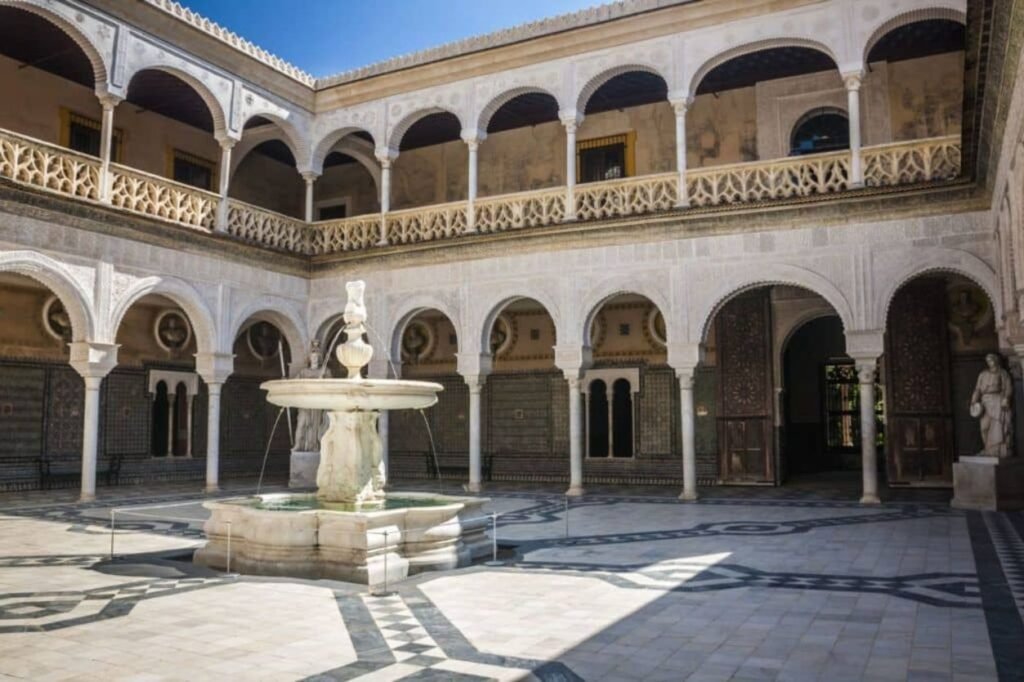
🖼️ Dueñas, Lebrija, and Casa de Pilatos
Seville hides palaces behind doors that seem discreet. The Palacio de las Dueñas (residence of the House of Alba) captivates with its courtyards overflowing with bougainvillea and lemon trees, the birthplace of the poet Antonio Machado. The Casa de Pilatos is the most sumptuous private palace in the city, an overwhelming mix of Italian Renaissance and Mudéjar art. And the Palacio de la Condesa de Lebrija will leave you stunned with its floors paved with authentic Roman mosaics brought in from Itálica.
🎟️ Organize your palatial visits:
Palacio de las Dueñas:
🔗 General admission
🔗 Guided tour
Casa de Pilatos:
🔗 Guided tour
🕊️ Macarena Basilica and the City Walls
Head over to the popular Macarena neighborhood to visit the Basilica that houses the city’s most venerated and mourned virgin. Right at its doors stand the Arco de la Macarena (Macarena Arch) and the best-preserved stretch of the ancient, ochre-colored Almohad Walls. Opposite them, the monumental Renaissance building of the Hospital de las Cinco Llagas serves today as the Parliament of Andalusia.
🌿 1929 Seville: Plaza de España and María Luisa Park
For the Ibero-American Exposition of 1929, the city pulled out all the stops and designed a monumental sector to the south that today is the jewel in its crown.
💃 The Dazzling Plaza de España
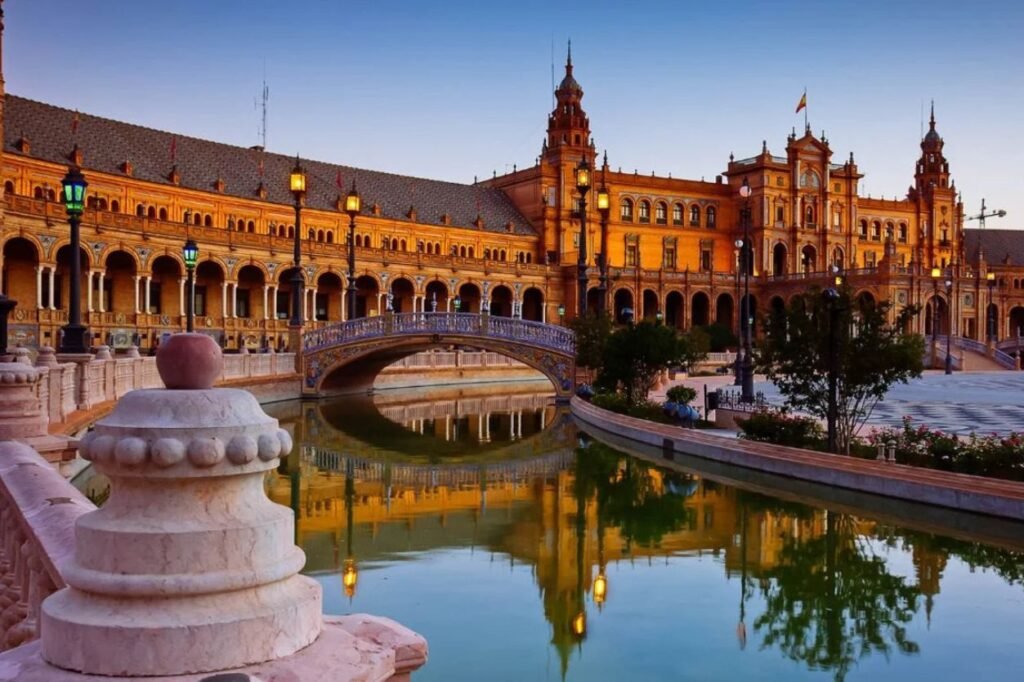
A masterpiece by Aníbal González, this semi-circular square spanning 50,000 square meters symbolically embraces the former American territories. Walk along the tiled benches dedicated to every Spanish province, cross its four bridges over the canal (where you can rent a rowboat), and feel like you’re on a movie set (parts of Star Wars: Attack of the Clones were filmed here).
🌳 María Luisa Park and the Torre del Oro
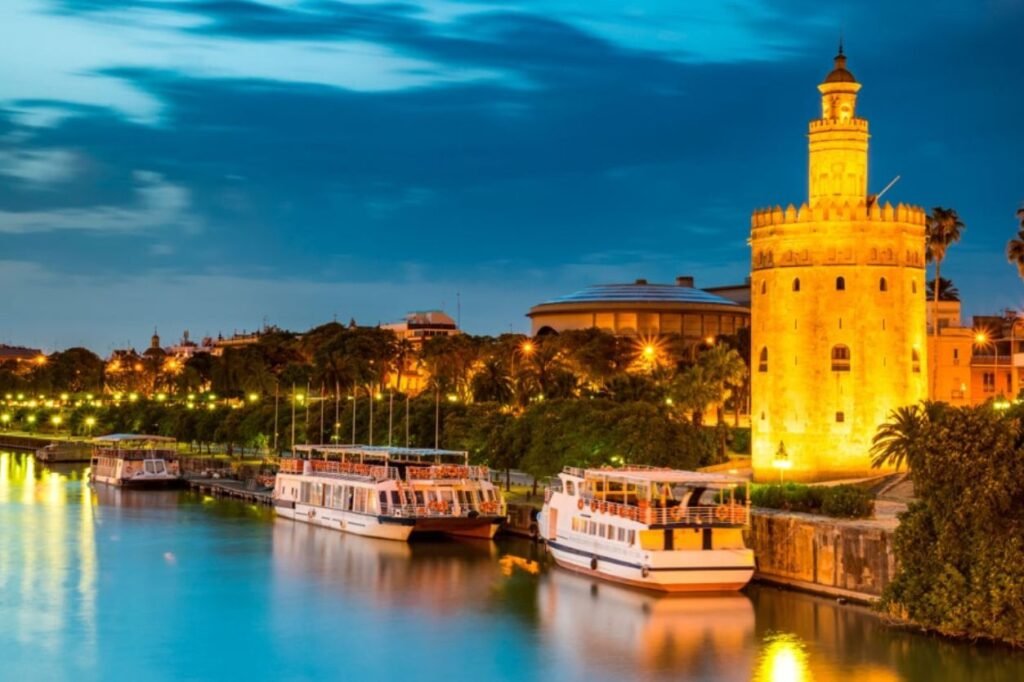
Stretching out right next to the plaza is María Luisa Park. Strolling under the shade of its giant trees towards the Duck Islet or the Plaza de América is total relief. Continuing towards the river, you’ll run into the Torre del Oro (Tower of Gold), a 13th-century military defensive tower that today houses the Maritime Museum. The best photo opp is walking along the banks of the Guadalquivir at sunset.
A spectacular and very cheap plan is to take the boat ride on the Guadalquivir that sets sail from the foot of the Torre del Oro to see the city from the water.
🎸 Crossing the Bridge: The Soul of the Triana Neighborhood
On the other side of the river, crossing the iconic Isabel II Bridge (Triana Bridge), the atmosphere changes. Triana isn’t monumental; Triana is pure character. It’s the cradle of bullfighters, flamenco singers, and potters. Peek down Calle Betis to see the colorful facades facing the river, get lost in the aisles full of fresh produce at the Triana Market, and look for a great souvenir in the ceramics workshops on Calle Alfarería.
Triana is also the epicenter for experiencing authentic flamenco without falling into massive, cold venues. Book your ticket to enjoy the footwork at the Tablao Baraka or, if you’re stuck in the center, check out the spectacular Flamenco Dance Museum.
🏛️ Excursion to the Roman Ruins of Itálica
Just 10 km (6 miles) away, in Santiponce, you can walk the streets of the very first Roman city founded in Spain and birthplace of the emperors Trajan and Hadrian: the Archaeological Ensemble of Itálica. Its massive amphitheater and the detailed mosaics in the homes of the Roman elite will blow your mind.
To really grasp the history of the ruins, sign up for this free tour of the archaeological site, or if you don’t have a car, book this comfortable excursion with transfers from Seville.
🥘 Micro-Gastronomy Guide: Where and What to Eat for Tapas in Seville
In Seville, you don’t dine in stiff restaurants; you eat tapas standing up, fast and loud. Skip the English menus in front of the Cathedral. Here are the local classics that never fail:
- El Rinconcillo (Calle Gerona): The oldest tavern in Seville (1670). You must order the Spinach with chickpeas (espinacas con garbanzos) tapa while leaning on its old mahogany bar. (Generous tapas for about 3-5€).
- Blanco Cerrillo (Calle José de Velilla): If you walk down Calle Tetuán, the unmistakable smell will hit you. Its unique and legendary specialty is the marinated fried anchovies (boquerón frito en adobo). Essential with a well-poured draft beer.
- Bodeguita Romero (Calle Harinas): Very close to Plaza Nueva. They are famous for making the best Pringá sevillana sandwich (the shredded meat and fat from the stew stuffed into a toasted bun) in the entire city. (You will eat brilliantly for about 15€/person).
- Casa Morales (Calle García de Vinuesa): Behind the Cathedral. Have a sweet wine and a portion of cured meats leaning directly against the huge 19th-century clay vats that decorate the place.
👦 Traveling with Kids and 🐕 Dogs to Seville
If you’re traveling as a family with kids, give them a break from the monuments by renting a rowboat in the Plaza de España canal. If the city is boiling, take them to the Seville Aquarium (at the Muelle de las Delicias) or spend the entire day letting out adrenaline at the Isla Mágica theme park, built on the pavilions of the ’92 Expo.
If you travel with your dog, keep in mind that access to the major historical enclosures (Alcázar, Cathedral, museums) is forbidden except for service dogs. The center is full of scorching asphalt in summer, so your salvation will be the parks: the massive Parque del Alamillo (in the north) has specific areas for them to run, and the Prado de San Sebastián Gardens are great for walking them in the shade.
💃 Keep your route going through Andalusia: Recommended Guides
Are you setting up a road trip through southern Spain? Discover our meticulously detailed guides to keep adding gems to your journey:
🤔 FAQ: Frequent Searches and Practical Questions for Traveling to Seville
What are the best free things to see in Seville?
Although the Cathedral and Alcázar charge admission, strolling through the epic Plaza de España, María Luisa Park, crossing the Triana bridge, or venturing into the labyrinth of narrow streets in the Santa Cruz neighborhood is free and makes up 50% of the city’s charm.
How far in advance should I book the Alcázar?
It is the most tourist-besieged monument. Capacity is very limited and strict. To avoid being left on the street looking at it from the fence, buy your online ticket or guided tour at least 2 to 3 weeks in advance, especially in spring or autumn.
How many days do I need to visit Seville?
To see the monumental heart, wander through Triana, and enjoy tapas stress-free, we advise 2 to 3 full days. If you want to take an excursion to the Roman ruins of Itálica, add an extra day to your planning.
When is the best time to travel to the Andalusian capital?
Spring (March to May) is perfect for the weather and the smell of orange blossoms, though it is expensive if it coincides with the Fair. Autumn is the smart, economical choice. Desperately avoid July and August; thermometers hit 42 ºC (107 ºF) and the streets at 4 in the afternoon are a desert.
How do I get from Seville airport to the city center?
The airport (SVQ) is barely 10 km (6 miles) away. Grab a ticket on the EA line bus (Especial Aeropuerto). For 4€ it connects you to Santa Justa station, the Torre del Oro, and Plaza de Armas in about 35 minutes. Super comfortable and frequent.
Are you more into wandering past the flowerpots in Santa Cruz, or crossing the river to eat tapas in Triana? Leave us your comment below, and we’ll help you with any logistical doubts to plan your perfect trip!